Love great design but not sure how it translates in the desert? In Summerlin, each village carries its own look, materials, and curb appeal cues shaped by climate and community guidelines. Whether you are house hunting or planning a refresh, you can lean into the local styles that feel timeless and still make them your own. This guide gives you village-by-village style cues, exterior palettes, indoor-outdoor ideas, and smart upgrades that work in Summerlin’s Mojave setting. Let’s dive in.
Summerlin design snapshot
Summerlin is a large, master-planned community on Las Vegas’s west side with dozens of villages and enclaves. The community’s growth and design language evolved across the 1990s to today, so styles vary by village age and builder era. For a quick primer on the master plan’s history and village structure, review the official overview from Summerlin’s history page.
Climate drives design here. Summers are very hot and dry, with average July highs around 100 to 105°F and low annual rainfall, which informs materials, shade, and landscaping. You will see stucco exteriors, tile roofs, covered patios, and water-smart landscapes because they perform well in the Mojave Desert. For temperature context, check the area’s NOAA climate normals.
Signature styles by village
Queensridge: Old-World Mediterranean
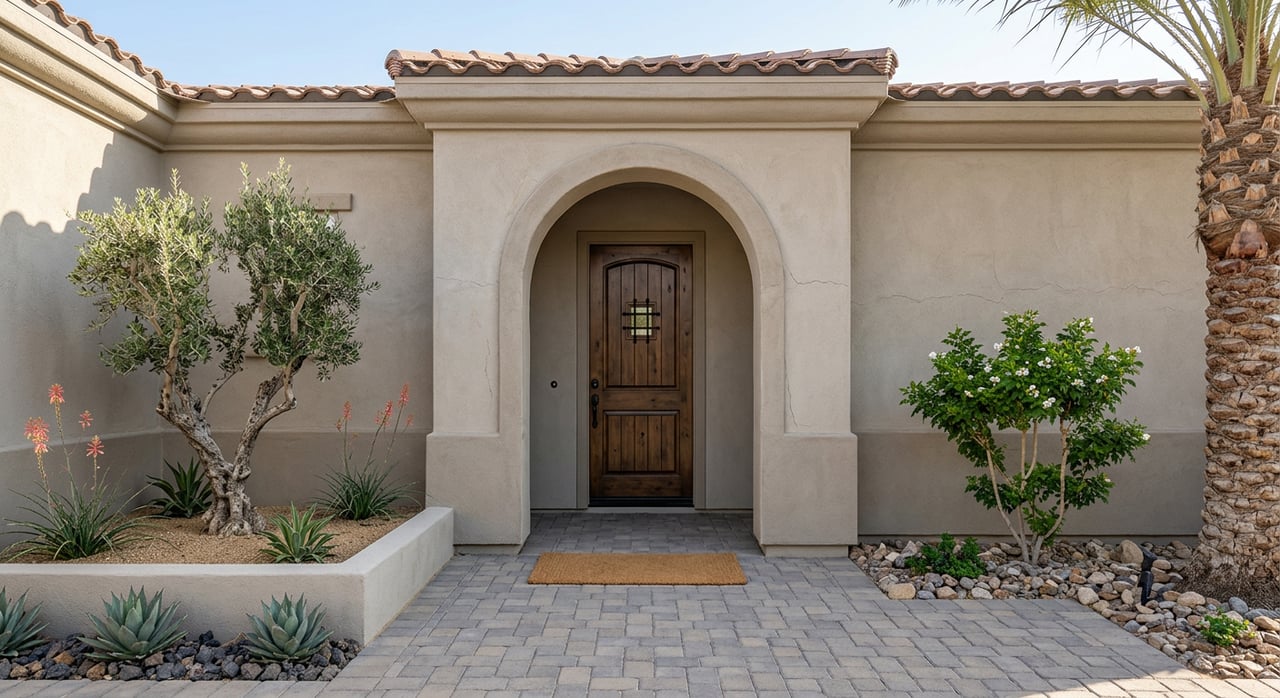
In Queensridge and select custom enclaves, you will notice warm stucco, arched openings, terracotta roof tile, wrought iron accents, and stone details. It reads like a European-inspired villa adapted to suburban scale, with courtyards and layered rooflines adding romance and shade. Get a feel for the neighborhood’s look through this Queensridge style snapshot.
The Ridges: Desert contemporary
The Ridges showcases desert-modern architecture with clean horizontal lines, large glass openings, mixed natural materials, and indoor-outdoor rooms designed around views. The palette tends to be restrained and textural rather than ornate. See how local guides describe the area’s aesthetic in this overview of luxury neighborhoods with modern styles.
Central and west villages: Production classics
Villages such as The Paseos, The Mesa, The Vistas, and The Arbors include production homes with Mediterranean and Spanish influences layered onto familiar suburban forms. Expect stucco, tiled roofs, and courtyard patios, especially in earlier phases, along with practical interior finishes like tile floors and plantation shutters. For a sense of product variety, check Summerlin’s note on western villages and floor plan diversity.
Exterior materials and palettes
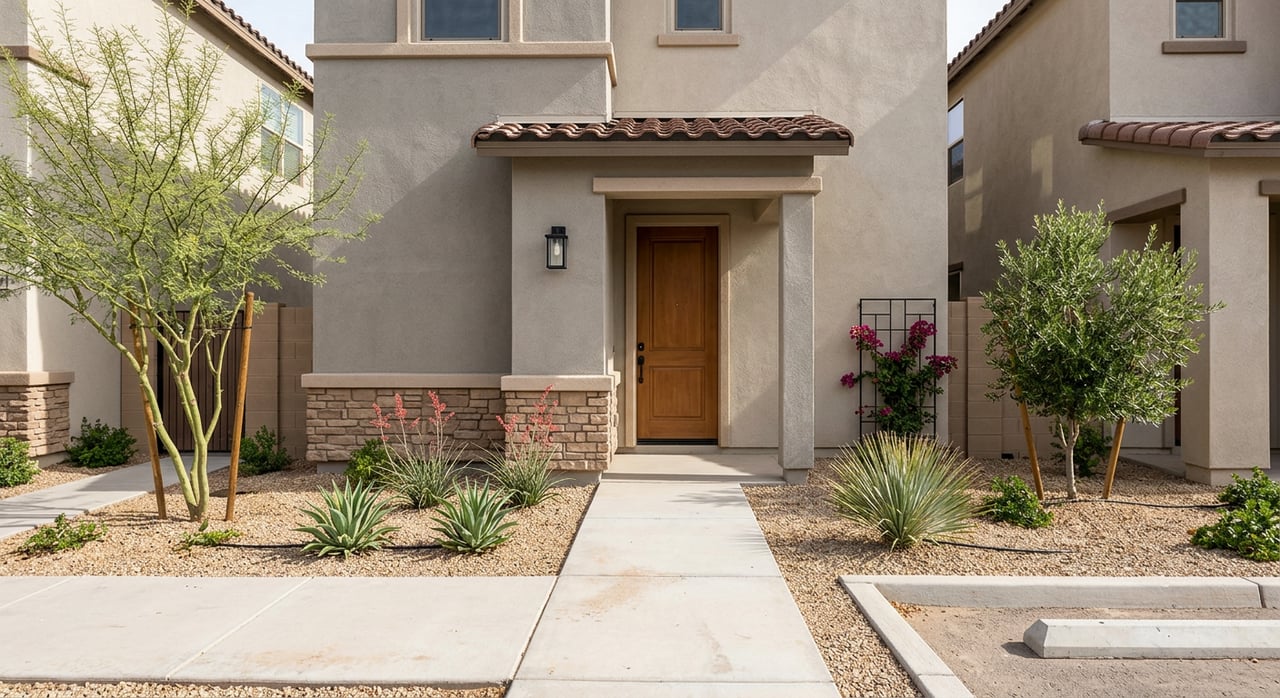
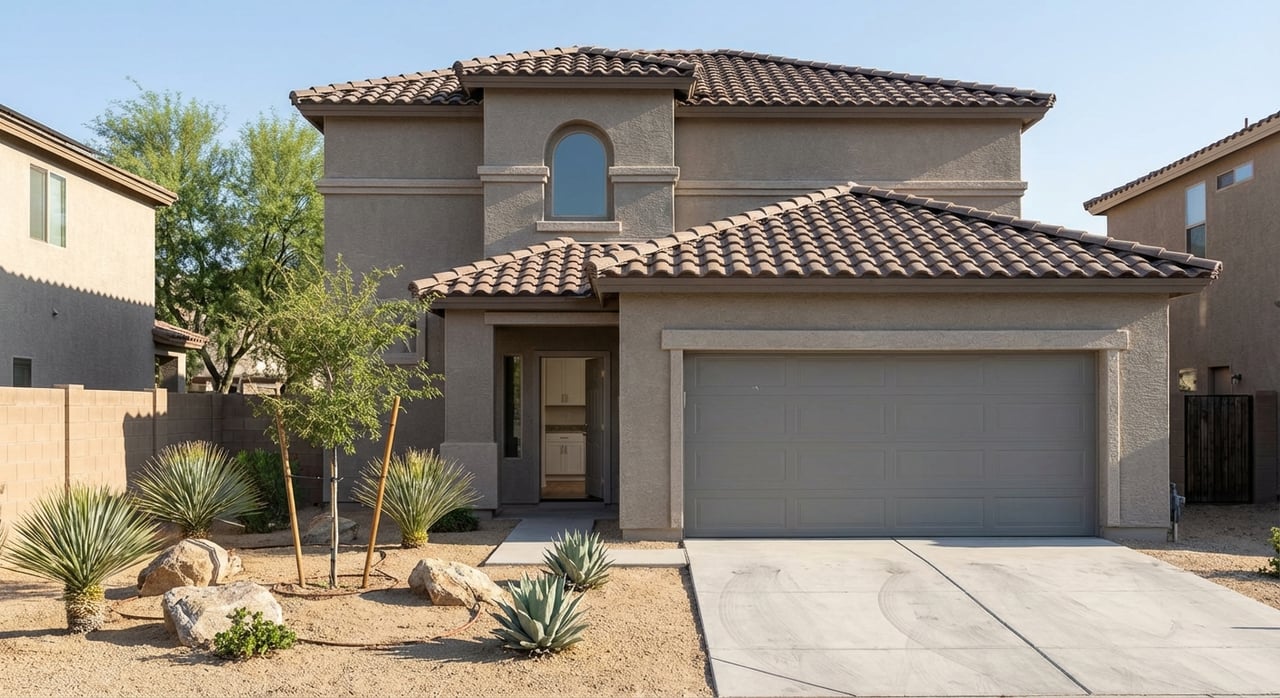
From the curb, Summerlin homes often pair stucco exteriors with clay or concrete tile roofs. You will also see stacked stone accents, iron details, block courtyard walls, and paver driveways where budgets allow. These materials stand up to heat and reflect the mountains’ natural tones.
For color, warm neutrals dominate. Think sand, beige, warm taupe, soft white, and linen stucco with charcoal or bronze trim accents. Design pros have leaned into grounded earth tones and muted greens because they feel desert-authentic and handle intense sunlight well. If you want current, desert-friendly color inspiration, browse the 2025 Color Collection of the Year, which skews warm and natural.
Landscape is part of the palette. Water-smart front yards with layered gravel or decomposed granite, drought-tolerant shrubs, agaves, and drip irrigation are common in both older and newer villages. If you are planning a curb appeal overhaul, review the Southern Nevada Water Authority’s Water Smart Landscapes program for rebates and plant guidance.
Indoor-outdoor living essentials
Indoor-outdoor flow is a hallmark of Summerlin living. Look for sliding or stacking glass walls and covered patios that act like rooms. Builders and custom projects increasingly design the backyard as an extension of the living area, as seen in features highlighted by industry coverage like The New American Home.
Shade and orientation matter. Large openings should be paired with deep overhangs, pergolas, or motorized shades to temper midday sun and reduce heat gain. In many remodels, adding a shade structure or upgrading window coverings is the simplest way to make glass-heavy spaces comfortable year-round.
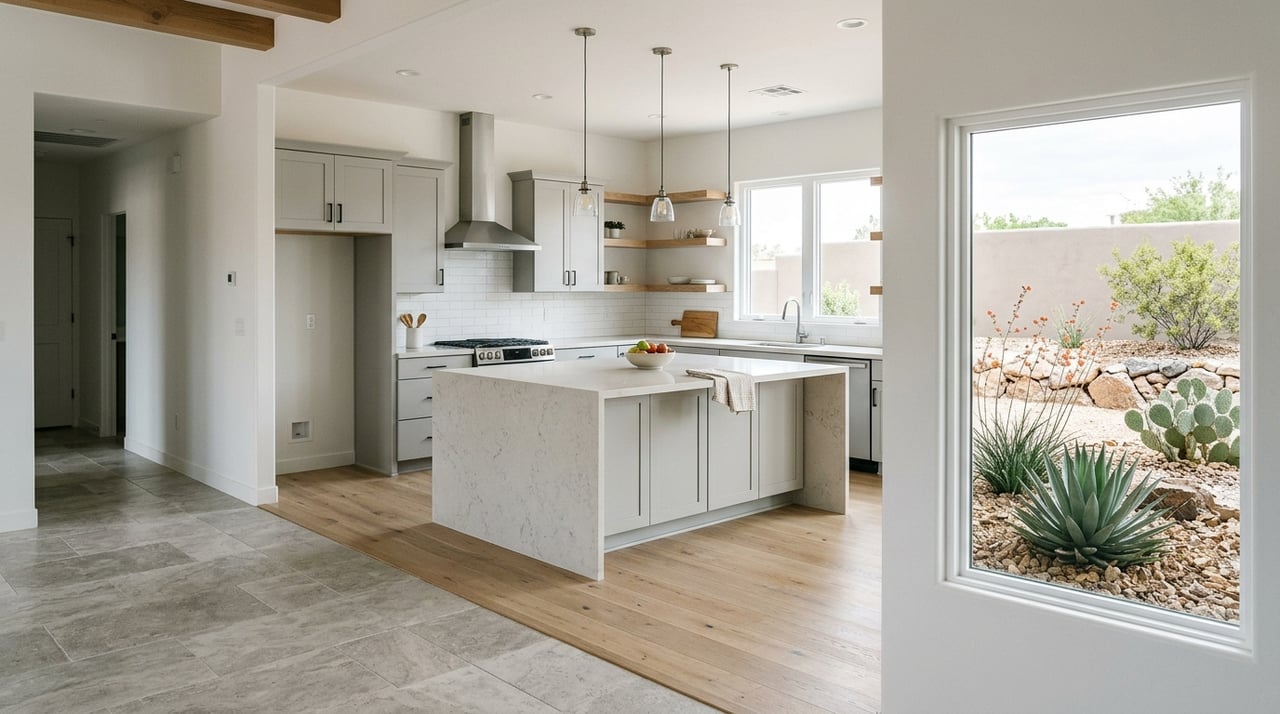
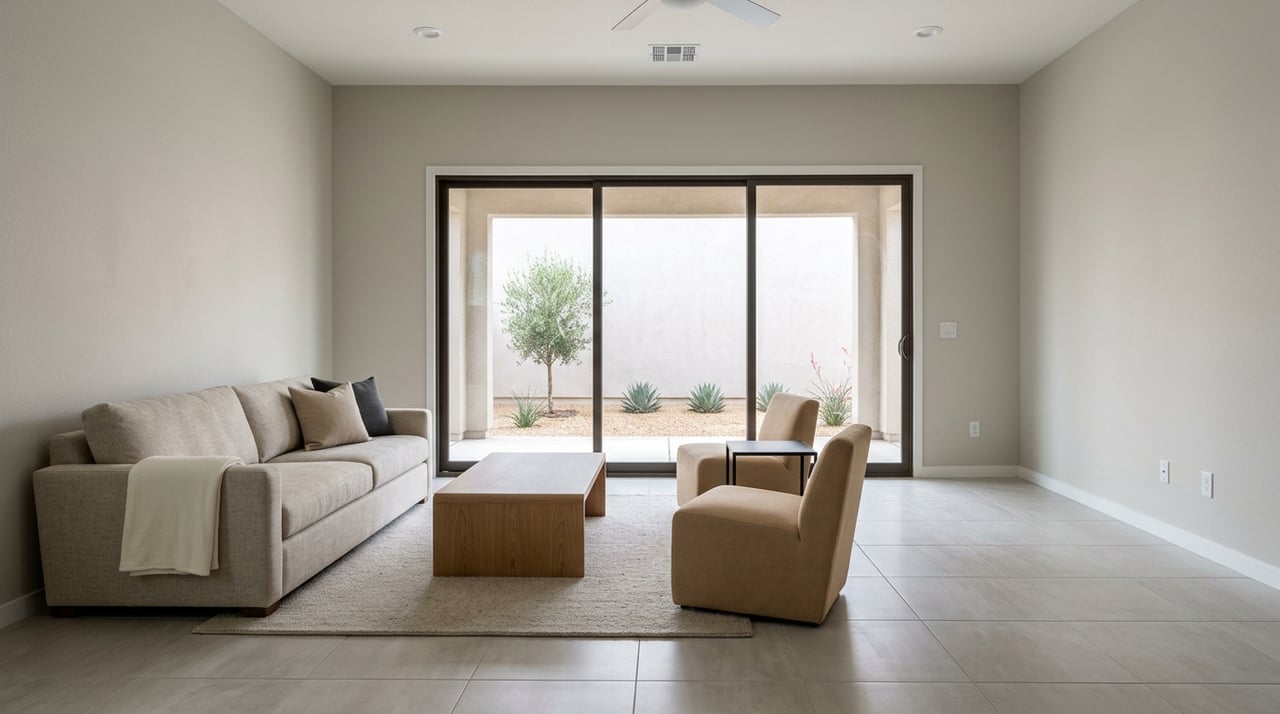
Materials that feel natural underfoot and cool to the touch work well indoors. Stone and large-format porcelain tile are common, while engineered wood and wood-look tile add warmth. Desert-modern interiors often combine a neutral base with tactile materials, sculptural lighting, and one signature stone or plaster feature. For design vocabulary and climate-smart material ideas, see this guide to desert-modern interiors.
Upgrade ideas that work here
Use these style-forward moves to elevate a Summerlin home while respecting climate and community character.
- Build a real outdoor room: Add a covered patio with recessed lights and ceiling fans, then layer a compact kitchen or grill wall so the yard functions like living space. Coverage keeps it usable in peak heat, and fans help in shoulder seasons. For why this matters now, see the indoor-outdoor trends recognized in The New American Home.
- Choose cool, durable floors: Large-format porcelain or stone reads contemporary, stays cool, and transitions well to patios. Wood-look tile offers warmth with low maintenance. See climate-smart material choices in this desert-modern materials guide.
- Control light with smart glazing: Consider larger sliders oriented to capture morning light or views. Pair with overhangs, pergolas, or motorized shades to manage solar gain and glare.
- Go water-smart at the curb: Replace turf with layered gravel, boulders, and drought-tolerant plants on drip. Rebates can offset costs, and the look aligns with local streetscapes. Explore SNWA’s Water Smart Landscapes rebates.
- Refresh finishes with texture: Add a limewashed or plaster feature wall, stacked stone at the fireplace, or matte black and warm brass accents in lighting and hardware. These touches modernize while keeping desert warmth.
- Update kitchens and baths with craft: Two-tone cabinetry, statement tile, and mixed metals feel current without a full gut. Focus on cohesive finishes and quality lighting for the biggest visual return.
Plan smart with local rules
Most Summerlin villages and gated enclaves use HOAs with design controls. Before changing paint, front-yard hardscape, fences, or anything visible from the street, review CC&Rs and the architectural review process. A useful primer on community governance and ARC considerations appears in this local HOA resource.
If your vision includes landscaping changes, check rebate programs and plant lists early. SNWA’s Water Smart Landscapes program outlines approved approaches and local water-use guidelines that many HOAs follow.
Finally, visit potential homes at midday and late afternoon. Orientation and elevation near the Spring Mountains affect sun, shade, and wind patterns, which directly impact comfort on patios and inside glass-forward rooms. For context on heat and dryness, see the regional climate normals you will be designing around.
How to shop by style
- Set your style goal: Do you prefer Old-World Mediterranean warmth, streamlined desert-modern, or classic production with room to personalize? Define must-haves and nice-to-haves.
- Map villages to looks: Shortlist neighborhoods that fit your aesthetic so you do not compromise on curb appeal. Use Queensridge for Mediterranean cues and The Ridges for modern minimalism, with central villages as flexible canvases.
- Walk homes at peak sun: Evaluate shade, glare, and cross-breezes. Check patio depth and where you could add a pergola or screens.
- Read CC&Rs early: Ask for paint palettes and hardscape rules up front. Note ARC timelines if you plan to remodel soon after closing.
- Budget for shade and surfaces: Allocate funds for patio covers, fans, and cool flooring. These deliver comfort and a cohesive look fast.
- Plan quick-win updates: Lighting, hardware, a statement wall, and a curated palette will tie everything together without a full remodel.
Work with a design-forward advisor
If you care about architecture, palette, and presentation, partner with an agent who does too. Andrea pairs a fine-arts eye with hospitality training to help you read a home’s bones, spot the easy upgrades, and present listings with polish through staging and high-resolution photography. She provides buyer and seller representation, rental placement, and relocation support across Summerlin and the greater Las Vegas area, backed by Engel & Völkers distribution for select luxury listings.
Ready to find the right village for your style or to prepare your home for market with a design-smart plan? Connect with Andrea Weaver to Request a Free Home Valuation & Consultation.
FAQs
What home styles are most common in Summerlin?
- You will most often see Mediterranean-influenced production homes, Old-World villas in select enclaves, and desert-contemporary architecture in newer luxury pockets.
How do Summerlin HOAs affect exterior changes?
- Many villages require architectural review for paint, hardscape, fencing, and visible equipment, so review CC&Rs and ARC timelines before starting projects.
Which exterior colors work best in the Mojave heat?
- Warm neutrals and grounded earth tones perform well in strong sun and suit local materials like stucco, stone, and tile, with charcoal or bronze accents for contrast.
Are water-smart yards expected in Summerlin?
- Water-smart landscapes are common and encouraged, with layered gravel, drought-tolerant plants, and drip irrigation, and rebates are often available through SNWA.
How can I modernize a Mediterranean interior without a gut remodel?
- Update lighting and hardware, introduce a plaster or stone feature wall, refresh cabinetry with a neutral or deep accent color, and add large-format tile or wood-look floors.
What indoor-outdoor features add the most livability?
- Covered patios with fans, larger sliders, shade structures, and cohesive hardscape surfaces create year-round comfort and a seamless extension of living space.